
Skip to content
Shipping container sales / Modifications / Build-outs
Home / Insulated Shipping Containers & Climate Control
INSULATION & INTERIOR SYSTEMS

Insulated Shipping Containers & Climate Control

Plan shipping container insulation, condensation control, interior finishes, ventilation and heating or cooling around stored contents and occupied use.

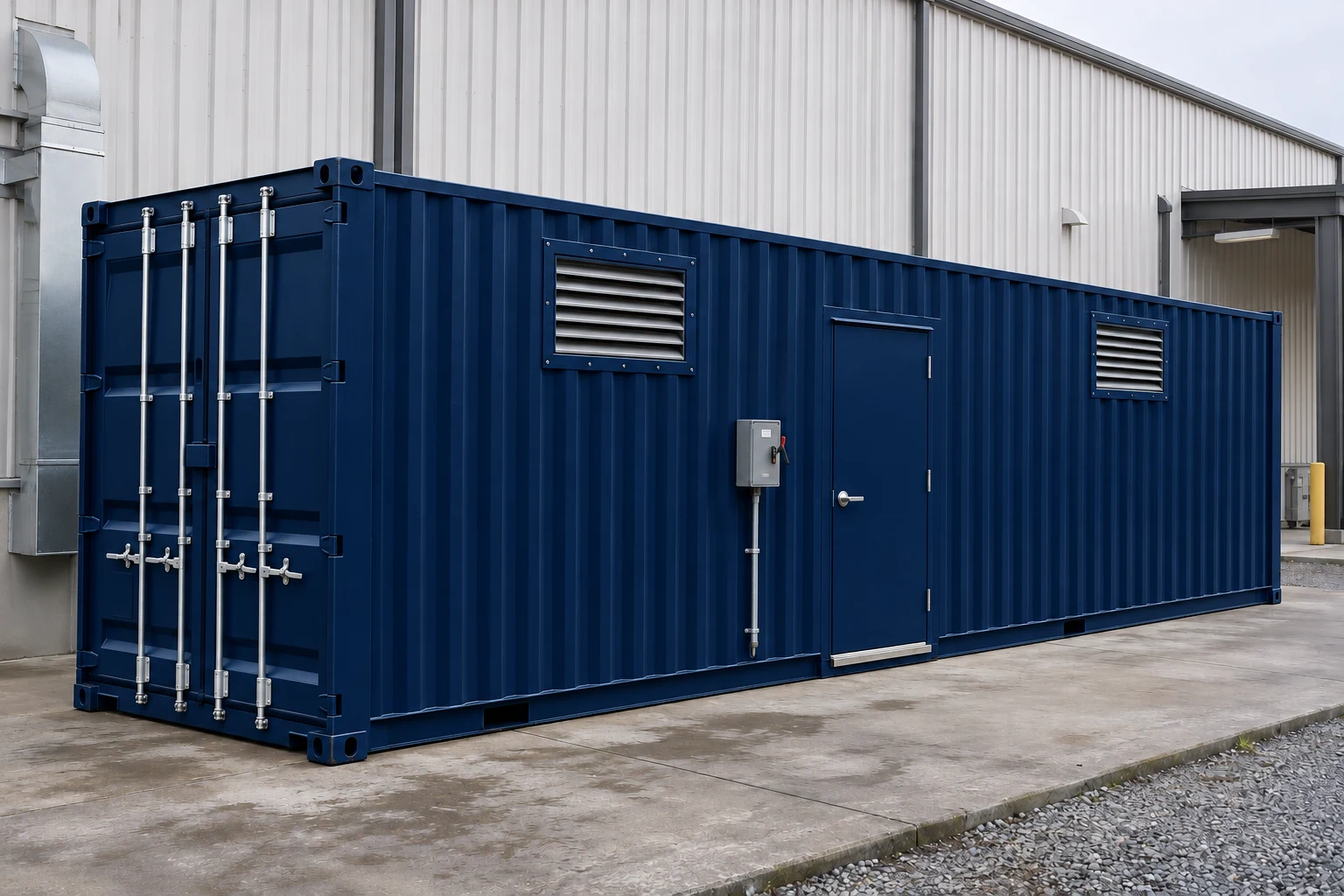
Insulated Shipping Containers & Climate Control exterior option
INSULATION & INTERIOR SYSTEMS

Protect the contents.
Plan the interior.

An insulated shipping container for stored stock has different requirements from a continuously occupied office or equipment enclosure. State the contents, temperature sensitivity, work schedule and available electrical supply before selecting a system.

Discuss this project
DEFINE THE DETAILS

Build the scope around your use.

Review the complete wall assembly

Insulation, framing, interior lining, joints and penetrations need to work together. Ask about material choices and thicknesses, moisture management and the surface needed for cleaning or equipment mounting. No single insulation type or thermal rating is implied by this page.
Allow for finished dimensions

Wall and ceiling build-ups reduce usable interior space. Include equipment height, shelves, door openings and service clearances in the plan. A high-cube container may offer useful additional exterior height, but finished dimensions still need confirmation.

Address condensation and ventilation

Insulation alone does not establish humidity control or eliminate condensation. Consider occupancy, wet work, stored materials, air exchange, door-opening frequency and site conditions. Ventilation and any heating or cooling equipment should be selected for that actual use.

Match HVAC and electrical demand

List the heat produced by machinery, electronics, appliances and people. Confirm the site supply and location of outdoor equipment, condensate drainage and maintenance access. Define who completes site connections and any required inspections.

FROM THE INSIDE OUT

Coordinate the details
before fabrication.

Include the container size, intended use, delivery ZIP, drawings or notes, and the systems you need. Confirm dimensions, materials, equipment, site work and responsibilities in the written proposal.

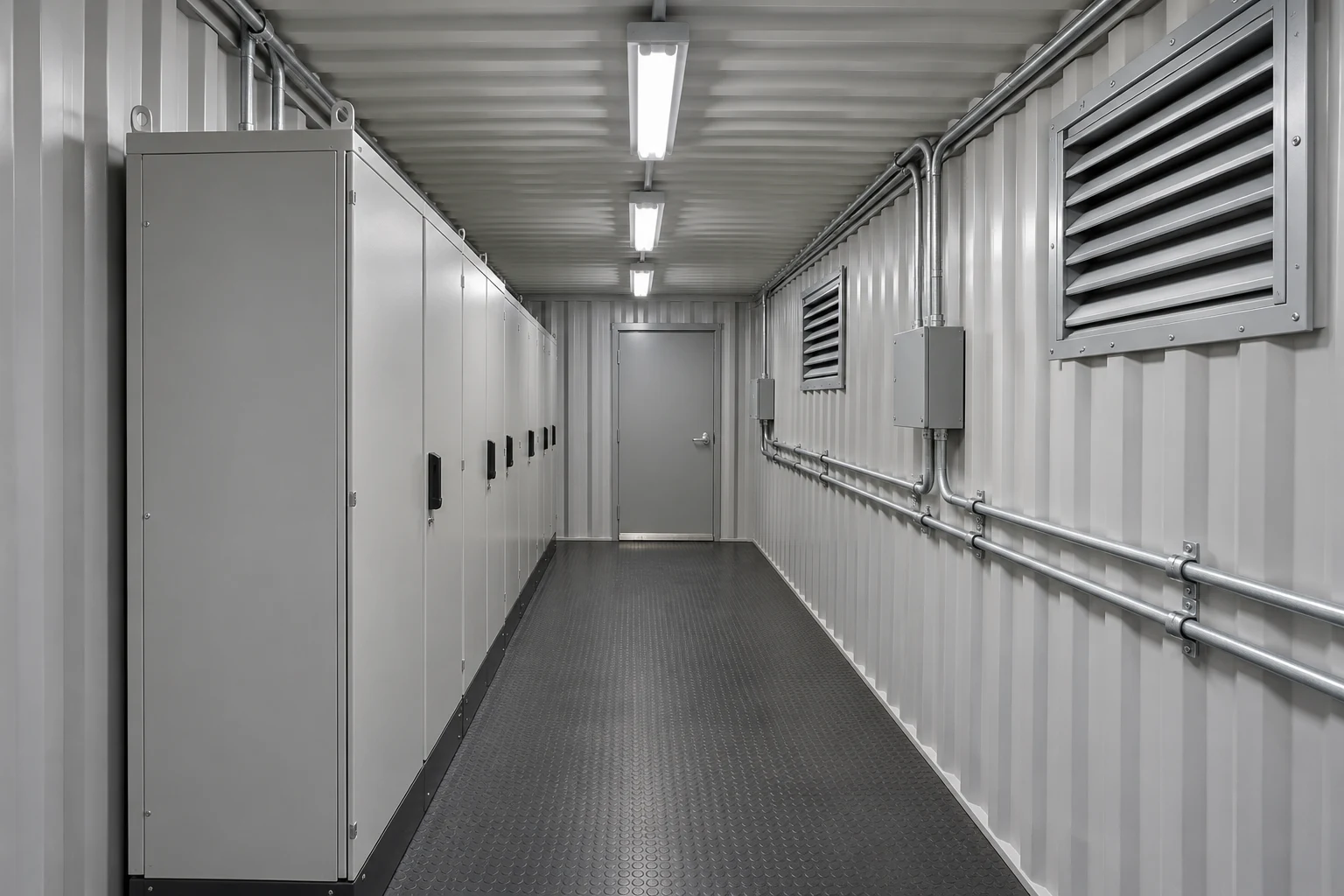
Container interior finish and layout option
PRACTICAL QUESTIONS

Before choosing your layout.

Does insulated mean refrigerated?

No. Insulation slows heat transfer; refrigeration is a separate equipment and control requirement. Share a required temperature range and the actual contents so suitability can be reviewed.

Can a used container be insulated?

Condition and suitability need review before lining the interior. Identify roof, floor, door-seal, moisture or corrosion issues first so the selected starting unit supports the intended fit-out.

Is heating and cooling included?

Only when listed in the written specification. Insulation, ventilation, HVAC equipment, electrical supply and final connections should each be identified in the proposal.

LET’S BUILD WHAT’S NEXT

Your project. Our next conversation.

Tell us what you need, where it’s going, and how you’ll use it.

Start your project
Get a quote ↗
Build-out gallery